Thursday, May 2, 2013

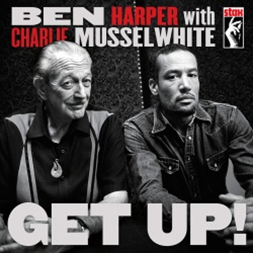
Get Up! reviewed by Diane Mandell


Get Up!
Ben Harper with Charlie Musselwhite
Stax Records
www.benharper.com
www.charlie
musselwhite.com  
10 tracks

"Get Up!" is the 12th studio album for Ben Harper.  Two-time 2005 Grammy winner for Best Pop Instrumental Performance and Best Traditional Soul Gospel Album, Harper began playing guitar as a child growing up in California where his grandparents owned a music store frequented by the likes of Leonard Cohen and Taj Mahal.  Influenced by musicians like Robert Johnson and Bob Marley, Harper combines song writing, vocals and guitar instrumentals to create a mix of blues, gospel and R&B.  He owns and plays three Weissenborn guitars manufactured in the 1920's and 1930's.  The signature of these lap slide guitars is their hollow neck body chamber which runs the entire length of the body.  Harper is also an activist whose well-organized website contains links to numerous environmental and social responsibility networks.

Charlie Musselwhite, a six-time Grammy nominee, 14-time W.C. Handy Award winner and Blues Hall of Fame inductee, has recorded over 20 albums since 1967 as well as guested on many more before collaborating with Harper on "Get Up!".  Born in Mississippi, Musselwhite spent most of his childhood in Memphis.  He moved to Chicago as a young man, soaking up the blues scene there.  Eventually he moved to California where he and Harper recorded sessions together and performed a dozen live concerts.  They were encouraged to collaborate by fellow musician John Lee Hooker after both joined Hooker for a 1997 session.  The result of that encouragement is "Get Up!"

Joining Harper and Musselwhite in the band are Jason Mozersky on guitar, Jesse Ingalls on bass and keyboards and Jordan Richardson on drums.  Harper wrote or co-wrote each track on the CD.

"Get Up!" is musically diverse, with powerful, often dark lyrics attesting to the pair's first-hand encounters with heartbreak and heartache.  As Musselwhite points out, "These songs are all from the heart, more so than from the head.  More than just music, they are reflections of life."  In "You Found  Another Lover (I Lost Another Friend)", Harper sings "I may lie to my heart, but my heart never lies to me."  while Musselwhite's harmonica croons in sweet and yearning harmony.  "We Can't End This Way" is a plea for unity between the "haves" and the "have-nots".   "I Ride At Dawn" was written in honor of a friend's Navy Seal son with Harper's signature Weissenborn slide guitar leading the battle.  This album is a serious two thumbs up and should not be missed.

Reviewed by Diane Mandell

Stone Blue reviewed by Diane Mandell


Stone Blue 
Willie May
Booman Music
www.williemay
music.com
10 tracks/37:10

This is the 12th album out of 13 for Willie May.  The Buffalo, NY area native and his original band members (Ron Kain - guitar, Tom Corsi - bass, Randy Corsi - drums) have played together since the band formed in 1984.  May has performed on stage with a host of musicians such as Buddy Guy, Chris Duarte, James Cotton, Alvin Lee, Steppenwolf, Bachman Turner Overdrive, Otis Clay, Edgar and Johnny Winter, and The Climax Blues Band, among others.  May has played thousands of venues including Attica Prison.  He has written all the songs on this CD.


The album is a nice mix of blues, jazz, country, and rock.  "Stranger In My House" is a blues-jazz number about the breakdown of a love relationship featuring Ken Parker on sax.  May's distinct gravelly voice laments "I got a stranger in my house where my baby used to be."  Another track, "Where Did We Go Wrong" is a hill country-flavored tune featuring the guitar-pickin' twang of Carl Eddy.  "Showtime" is another jazzy number featuring Ken Parker on sax and Ken Parker on harmonica.   One of the best tracks is "So Long Ago" with May singing about loss and moving on with lyrics like "I don't look back anymore...that was so long ago." Another album definitely worth a serious listen.


Reviewed by Diane Mandell

The Town Crier reviewed by Diane Mandell


The Town Crier
Robert 'Top' Thomas
WildRoots Records

Facebook.com/
RobertTopThomas
13 tracks/42:57

This album is New Smyrna Beach, Florida native, Robert 'Top' Thomas' first solo album endeavor.  Thomas has toured and recorded with the likes of Noble 'Thin Man' Watts, Lazy Lester, Bill 'Sauce Boss' Wharton, and Alex Taylor since he was 13.  Thomas was also a founding member of Smokehouse, recording four albums on the King Snake Records label in the 1990's to define Florida Swamp Blues as a distinctive genre in the world of blues.  Twelve of the 13 tracks were written for the disc project with album producer Stephen Dees noted most often.  The third track, "The Same Thing Could Happen to You" is the only tune composed for another project.  Previously written by Jerry West and recorded by first-generation swamp blues musician, Lazy Lester, Thomas' vocal interpretation is similar and Thomas notes his thanks to Lester on the cd liner for inspiring him to make this album.


"The Town Crier" is a compilation of down and dirty delta swamp blues.  Thomas' voice is gritty and gruff yet clear enough to carry the album's simple short stories.   Good guitar riffs are ample throughout.  The instrumental "Yeehaw Junction" has tenor sax and harmonica complementing the riff.  Stephen Dees' "Bad Seed" has Thomas grinding out the words, "Why do you water your garden with the tears of the broken hearted?".  "Blues Grass" and "What's the Matter Ma" croon about hard economic times.  "Sugar Shop" is one of my favorite tracks with Wainwright's boogie piano accompanying Thomas' guitar riffs and gravel vocals.   Another favorite is the title track, "The Town Crier" with great piano and smoky harmonica.  "Lazy Little Daisy" is a humorous number about a deadbeat spouse.  I recommend listening to this album more than once as it will definitely grow on you.  Two thumbs up.

There's a Time reviewed by Mark Thompson


There's a Time

Doug MacLeod
Reference Recordings
www.doug-macleod.com
www.reference
recordings.com
13 tracks/58:09


Over his thirty year career, Doug MacLeod has consistently honored the lessons he learned from legends like Big Joe Turner, Eddie “Cleanhead” Vinson and George “Harmonica” Smith. MacLeod's original songs take a hard,  honest, and often humorous look at world as he sees it. His heartfelt tales are delivered with his masterful storytelling skills, consistently connecting with listeners on deep emotional levels while his immaculate phrasing on a bevy of guitars creates a rich backdrop for his riveting vocals. Nominated for numerous Blues Music awards, including “Acoustic Artist of the Year”, MacLeod is firmly established as one of the reigning masters of the acoustic genre.


On his latest release, he changes course a bit by adding long-time associate Denny Croy on bass and the renown Jimi Bott on drums, both men adding rich rhythmic textures to the proceedings. MacLeod switches between his personally hand-crafted National M-1 Reso-phonic he calls “Moon”, his older Gibson C-100 “Little Bit” acoustic, a National “O” called “Owl” and a borrowed 12 string National El Trovador.


The recording was done live in the recording studio by Grammy-winning engineer Keith Johnson, who is known for his ability to capture and accurately recreate the magic of a live performance. MacLeod admits that he initially had some hesitation about this method of recording but the trio quickly settled into a relaxed comfort zone based on their years of playing together. The result is a sonically superior recording that articulates each note from Bott's subtle use of his drumsticks to the notes that ring out of the leader's guitar.


Highlights abound, starting with “Black Nights”, a worrying blues about nightfall and the intense feelings it conjures up. “Run With the Devil” is a descriptive portrait of a man from MacLeod's past who “..played music with a cross-eyed mind.”. The talking blues is set up by sharp slide licks on 'Owl'.  MacLeod paints another vivid picture on “St. Elmo's Room and Pool”, making you feel right at home at a neighborhood joint that offers” ..a fine selection of real cheap blues” in addition to a variety of illegal entertainment options. On “I'll be Walking On”, he delicately picks on 'Moon' while his voice rises in a mournful cry as love fades. The shimmering tones of the 12 string  El Trovador compliment MacLeod's voice as he slips into the falsetto range  on “The Up Song”, delivering a positive message about the power of hope.


MacLeod's wry sense of humor gets a workout on “My Inlaws Are Outlaws” over a light, swinging groove while he takes dead aim at the self-absorbed on “The Entitled Few”, calling out those who ignore the suffering all around them. Another stand-out track revisits a street-corner debate MacLeod had with a zealous ”Christian” over the merits of Biblical scripture and who will receive salvation. “A Ticket Out” is a gentle ballad relating how regret eats away at you when the time comes to end a relationship. On “Rosa Lee”, MacLeod wrings some razor-sharp slide licks from 'Moon' and you can hear how  the three musicians are in perfect sync.


Croy's bass provides powerful foundation on “East Carolina Woman” as the singer expounds on another relationship that left him with a troubled mind. The emotionally-charged rendition of “The Night on Devil's Road” reaffirms MacLeod's mastery as a storyteller. The haunting “Ghost” closes the disc with hair-raising cries and a hypnotic guitar line.


Doug MacLeod has earned the many accolades and honors that have come his way in recent years. He continues to find creative ways to rework the blues traditions, honoring the legacies of the legends he learned from. Keeping in mind that he has over twenty recordings to his credit, There's a Time might be his best yet. He takes us into the darkness, then pulls us out, offering a glimmer of hope that some day we can make the world a better place. Until then, be thankful that we have him around to continue to guide us to look at the world with brand new eyes. This one come highly recommended!


Reviewed by Mark Thompson

Long Walk Home reviewed by Mark Thompson


Long Walk Home 
Kevin Selfe
Delta Groove Music, Inc
www.kevinselfe.com
www.deltagroove
music.com
11 tracks/50:11

A move to Portland, OR six years ago has really paid off for guitarist Kevin Selfe. Along with his band, the Tornadoes, Self quickly became a fixture on the Northwest scene, winning a number of area blues music awards and capturing plenty of accolades for his Playing the Game release. With the backing of the Delta Groove label, Selfe is looking to reach a larger national – and international – audience.

Selfe plays guitar and handles the lead vocals. He also wrote all of the songs and served as the Producer for the project, using the studio that drummer Jimi Bott built in his home. Allen Markels is the other half of the strong rhythm section. Veteran Gene Taylor appears on four tracks on piano. The same tracks are bolstered by a horn section comprised of Joe McCarthy on trumpet, Chris Mercer on tenor sax and Brad Ulrich on baritone sax.

There is plenty to like, starting with Selfe's commanding performance on “Mama Didn't Raise No Fool”. Doug James' honking baritone sax props up the low end, Steve Kerins fills out the arrangement on piano and Mitch Kashmar blows a memorable acoustic chromatic harp solo. But it is the leader's brawny voice and gut-bucket guitar that make the biggest impression. Tracks like “Duct Tape on My Soul” and “Moving Day Blues” show display a strong T-Bone Walker influence, robust horn charts and smooth vocals. The later track is another highlight as Selfe's penetrating guitar licks ride the riffing horn section, building the slow blues to a cathartic finish.

Bott lays down a swinging shuffle beat on “Walking Funny” as Taylor rocks the 88's. The horns get to stretch out a bit on “Second Box on the Left” as Selfe's deep voice articulates the hard times that befell him after losing his job. Selfe plays acoustic slide on a resonator guitar on “The Blues is My Home”, singing with unerring frankness about the music he loves. The frantic “Last Crossroads” is less effective in the acoustic format despite Bott's sure-handed work. Despite Selfe's spirited efforts, the track is weaker lyrically than the rest of the program and fails to impress.

Selfe regains his footing on “Dancing Girl”, utilizing a guitar lick from “Lonely Avenue” to set-up another solo full of cascading runs up and down the guitar neck. He generates a raw, menacing electric slide tone on “Midnight Creeper” as Bott once again kicks things into gear. Kerin's piano propels the first half of the closing track, “Put Me Back in Jail”, before Selfe tears it up on slide on a tune that reworks “Give Me Back My Wig”.

One listen to this recording will make it clear that Kevin Selfe is a very talented musician. At times the disc could use a bit more greasy textures as some arrangements are spot-on recreations of music of by-gone eras. But Selfe avoids cliches, demonstrates his versatility and ends up with a recording that warrants your consideration. We will be hearing a lot more from him down the road.

Reviewed by Mark Thompson

Saturday, March 2, 2013

In Between Time reviewed by Harmonica Joe


In Between Time 
Al Miller Chicago Blues Band
Delmark Records
www.delmark records.com
17 tracks/72:41 

Al Miller’s, “In Between Time”, released by Delmark Records, was recorded in 1999 and originally released in 2000. Miller is an outstanding harmonica player, singer and guitarist who has been playing Chicago style blues since the 1960’s. In the past he has moved to California, returned to Chicago, left the music scene to raise a family then came back to the blues scene with the release of “Wild Card”. Then after several years with health problems he came back and recorded “In Between Time”. The play list for this project includes relatively lesser known tunes by BB King, Johnny Young, Eddie Taylor and Walter Jacobs. Also added to the list are 5 songs written by Miller which make this CD over 73 minutes of strong Chicago style blues.

Miller has a large group of very talented musicians, that we are all aware of and embrace,  joining him for this recording. “In Between Time” features Billy Flynn, Dave Specter, John Primer as well as Miller playing guitar. Harlan Terson takes on the job of bass player for most tracks while Barrelhouse Chuck and Ken Saydak are at the piano while Willie and Kenny Smith and Mike Schick share the drum rolls on different tracks. All this plus several other fine musicians just enhance Al Miller’s ability with the harmonica, guitar and vocals. This man presents his music with much feeling and a great feel for his love of the blues.

“In Between Time” is a strong example of Miller’s tune writing and ability to sing some real slow Chicago blues. The lyrics tell us the possibilities of life that may come to us. Al states “In between times of sickness and in health, darkness and light, when shadows capture the night and when I don’t know right from wrong”. These are all examples that state that we all have a lot going on in our life. Miller on guitar along with Billy Flynn’s slide guitar is really a treat for the ears. Joe Filisko steps this tune up a notch by playing his style of electric harp while the addition of the piano (I do not know who plays here) really makes this tune a hit. Johnny Young’s tune,  “ I Got It”, is a swell instrumental tune showcasing Miller on the harmonica. Al plays with strong tone and a feeling for the mood of the tune. Ken Saydak shows off his stuff on the piano as Billy Flynn solo’s away on the guitar. This track is like a full blown blues jam highlighting the massive talent of these musicians on “In Between Time”.

Al plays his great style of harp on the cover of Willie Dixon’s “Dead presidents”. With John Primer singing the vocals and the saxophones of Berry Winograd and John Brumbach plus Harlan Terson and Mike Schlick leading the way, Miller is allowed to treat the ears to a swell harmonica solo. Also, if you have never heard of a tune called “1839” by Elmore James you will enjoy listening to it. John Primer again sings the lyrics and play guitar while Miller stands out on the harp. This tune has it all as blues tunes go.

With 17 solid tracks and almost 74 minutes of awesome Chicago style blues on “In Between Time” it is very easy to recommend that you take the time to check out the music of Al Miller and the Chicago Blues Band. Miller does not allow himself to change the blues to fit into something other than what they should be. He and the band are a true example of what the Chicago blues are.

Reviewed by Harmonica Joe Poluyanskis

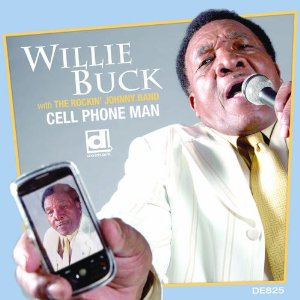
Cell Phone Man reviewed by Mark Thompson


Cell Phone Man
Willie Buck
Delmark Records
Www.delmark.com
17 tracks/59:31

Veteran singer Willie Buck adds another chapter to the resurgence of his career with a recording that builds on the momentum generated by his 2010 release on Delmark Records, The Life I Love. His latest mixes seven original songs with a variety of covers that include five written by Buck's greatest influence, the legendary Muddy Waters. After raising his family and supporting them primarily as an auto mechanic, Buck is ready to share his talents with a wider audience. He did make an occasional club appearance over the last three decades but only the most die-hard blues fans had ever heard of him, let alone actually heard him singing live or on record.

If it is true that we are judged by the company we keep, Buck scores high marks for the outstanding group of musicians that help him out on this project. Every one of them is well-versed in the traditional Chicago electric style, starting with the twin guitars of Rockin' Johnny Burgin (who co-produced the disc with Delmark’s Steve Wagner) and Rick Kreher (who played in Muddy Waters’ band). Barrelhouse Chuck Goering studied with all of the great Chicago blues piano players and his playing testifies to the fact that he learned his lessons well. The rhythm section of John Sefner on bass and Steve Bass on drums is rock-solid. Bharath Rajakumar and Martin Lang may not be names that spring to mind when you think about harp players, but both offer proof that they deserve wider recognition.

Buck's voice rings out loud and clear throughout the disc -- gritty one moment before slipping into a soulful lament the next. His feelings of resignation are apparent on the opener, “Doin' Good and Bad at the Same Time” while the title track finds him attempting to incorporate modern technology in his pursuit of a love interest. Other originals like “I Want My Baby” and “Two Women Talking” find Buck applying new lyrics to familiar blues progressions. He sings with unerring frankness on the first tune while Barrelhouse Chuck's hands dance across the keyboard. The second number finds Lang and Goering weaving together rich fills behind Buck's powerful voice.

The longest cut, “Strange Woman” is the first of the Muddy Water's tunes that the band tackles. Buck adopts some of his mentor's vocal qualities, Rajakumar wails on his harp and Burgin impresses with his distinctive guitar playing. Goering’s spirited efforts on “Going Down Main Street” are another highlight, followed by Buck's emotionally-charged rendition of “Streamline Woman”. Burgin switches to acoustic guitar for a stripped-down version of “Two Trains Running” that keeps the focus on Buck's raw voice. A second acoustic track, “I Wanna Talk to My Baby”, is in a similar vein with another potent effort from the singer. The disc closes on a high note as once again the band unites as a tight ensemble behind Buck for a hearty run-through of “Blow Wind Blow”.

Add this one to recent recordings from Mud Morganfield and Taildragger that show there is still plenty of life left in the old-school styles, especially when the music is entrusted to musicians with a deep love of the roots. Willie Buck understands because he was there back in the 1950s, experiencing the power of Muddy Waters, and other pioneers, live in the flesh. He honors their legacy with this unembellished update that never strays from the traditional sound – and is well worth a listen.

Reviewed by Mark Thompson